Why Heavy Equipment Safety Parts Require Daily Attention
Fleet managers face a relentless drive for productivity but more so in the Middle East construction, infrastructure, and mining sectors. When machines are operating in demanding environments, the primary focus naturally turns to major mechanical components. Usually these are powertrains, hydraulics, and engines that receive strict maintenance scheduling because their failure immediately halts a project.
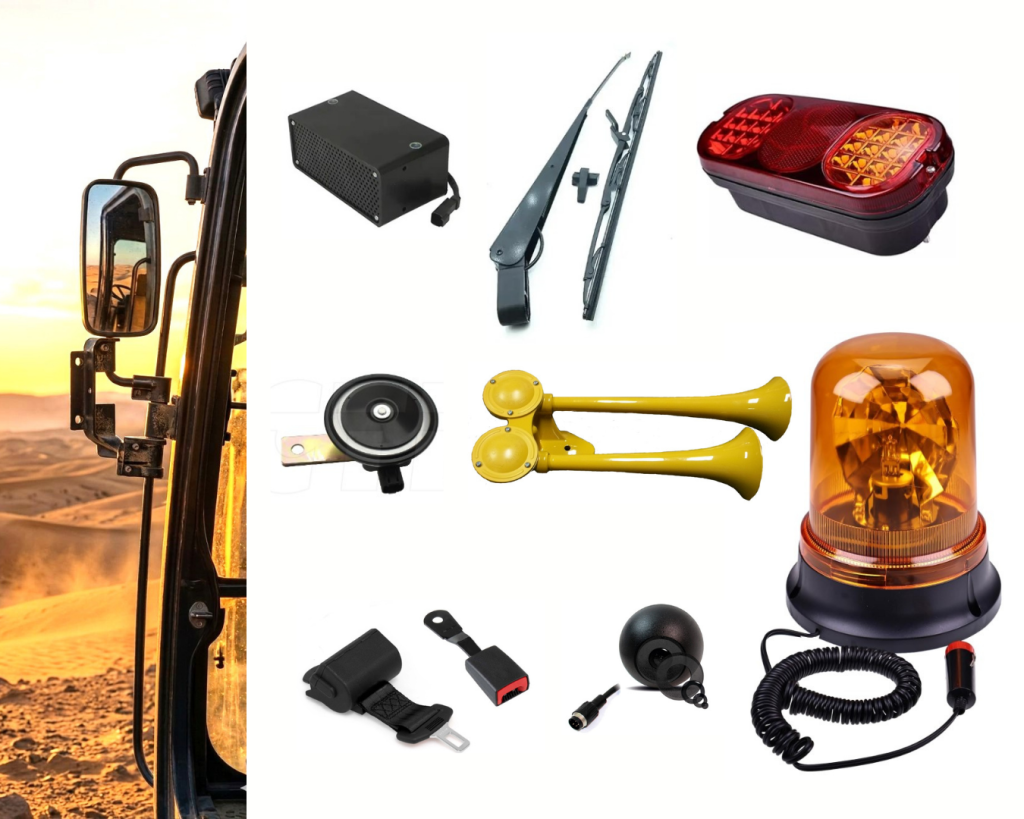
Essential safety components—such as mirrors, warning lights, reverse alarms, and wipers—frequently slip to the bottom of the priority list.
All too often, these critical safety items only receive dedicated attention during annual vehicle inspections, official registration renewals, or in the unfortunate aftermath of an onsite incident or breakdown. Treating safety systems as temporary requirements just to pass a compliance check creates unnecessary risk for operators, ground crews, and project timelines.
The Real Cost of Regional Environment Elements
Operating heavy machinery across the UAE and the wider GCC region introduces extreme environmental challenges. Intense heat, high vibration, heavy dust, and continuous operation take a steady toll on a machine’s secondary systems.
Under these conditions, a small issue can escalate quickly:
- Dust accumulation and heat can degrade electrical wiring, causing headlights, tail lights, or rotating beacons to fail unexpectedly during night shifts or low-visibility operations.
- Constant vibration can loosen hardware, causing mirrors to shift out of alignment or damaging camera monitoring systems.
- Extended exposure to heat weakens rubber components, causing windshield wipers and washer systems to fail when operators need them most for clear visibility.
When a reverse alarm stops functioning or a side mirror breaks, the machine does not stop running, but the site immediately becomes less safe. Blind spots increase, communication drops, and the probability of an accident rises.
Shift from Reactive Compliance
Waiting for the next registration renewal to fix a broken indicator or a faulty horn is a reactive approach that compromises workplace safety. Integrating these components into standard maintenance checklists ensures operational reliability and compliance with site safety standards.
A simple shift in routine can make a significant difference:
- Daily operator checks: Encouraging operators to complete a quick visual and functional check of all safety elements before starting their shift ensures that basic visibility and warning systems work perfectly before the machine enters a busy work area.
- Weekly fleet audits: Fleet managers can use weekly walkarounds to identify early signs of wear, such as cracked lenses, loose mounting brackets, or fraying wiring harness insulation, allowing parts to be replaced before a total failure occurs.
- Immediate corrective action: Replacing a damaged safety part immediately prevents minor damage from evolving into a costly incident or unexpected project downtime.
Safety as an Operational Standard
Ensuring that seat belts, warning flashers, horns, and cameras are fully operational is not just about satisfying regulatory inspectors once a year. It is about protecting the people who operate the machinery and those who work around it every day.
Maintaining these systems consistently reduces risks, keeps projects moving smoothly, and demonstrates a genuine commitment to operator welfare and high workplace standards. Consistent attention to safety parts keeps fleets prepared for any inspection while protecting the entire operational environment.